Calgary-Based | Serving Businesses Across Canada
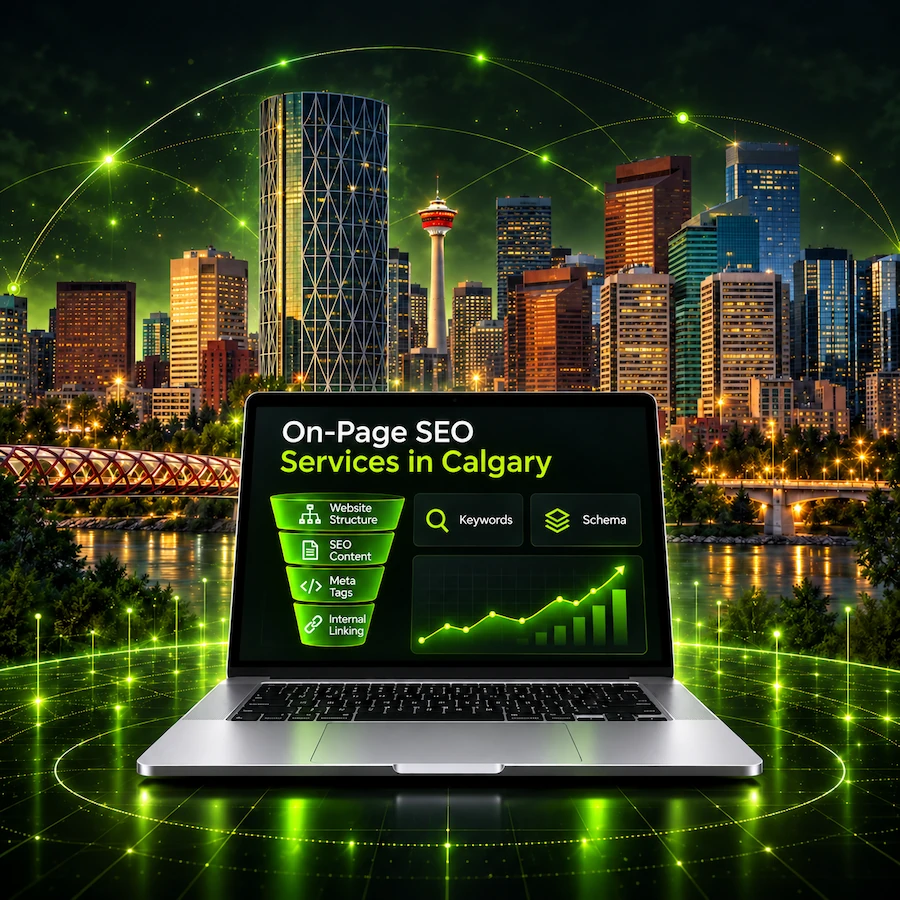
On-page SEO is the foundation of a well-optimized website, helping search engines and AI-powered platforms understand your content while creating a better experience for visitors. From page structure and keyword placement to content relevance and technical elements, every detail contributes to how effectively your website performs in organic search and AI-driven search experiences. A strong on-page SEO strategy ensures your website is built to attract the right audience and support long-term growth.
At OrbiOn Digital, we provide professional On-Page SEO Services in Calgary to help local businesses improve their search visibility and strengthen their online presence. Our approach focuses on making every important page clear, relevant, and accessible to search engines, AI-powered platforms, and potential customers. We combine SEO best practices with a deep understanding of user intent to help your website connect with people actively searching for your products or services.
Effective on-page SEO goes beyond simply adding keywords to your website. It involves creating a consistent connection between your content, page elements, and the search queries that matter to your business. By building this foundation correctly, your website becomes better positioned to compete in search results, attract qualified organic traffic, and turn more visitors into potential customers.
Professional on-page SEO works by improving how a website is structured, organized, and presented to search engines, AI-powered platforms, and users. Search engines analyze various elements of a webpage, including its keywords, meta tags, content, headings, internal links, and HTML structure, to determine its relevance to specific search queries. When these elements are properly optimized, search engines can more easily crawl, interpret, and index the website’s content. This helps individual pages compete for relevant search queries and improves their potential to attract qualified organic traffic.
Effective on-page SEO also plays an important role in user experience and website performance. A logical website structure, clear navigation, relevant content, and well-organized information make it easier for visitors to find what they need. These improvements also help search engines understand the relationships between pages and recognize the topics covered throughout a website. As a result, professional on-page SEO supports stronger search visibility, better content accessibility, and a more effective path from search results to meaningful user engagement.
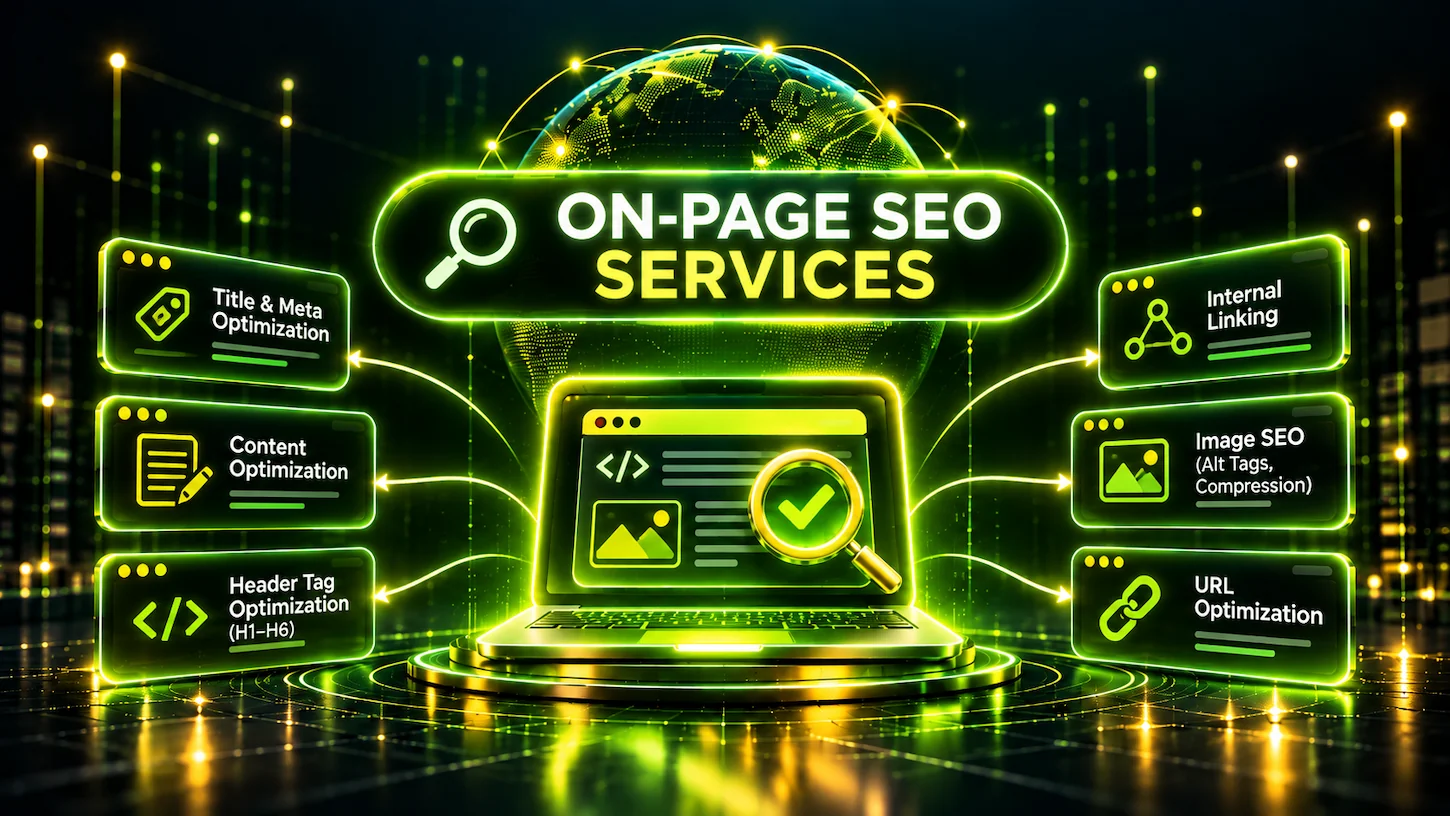
Professional on-page SEO involves several essential components that work together to improve website performance:
When these elements are properly implemented, they create a consistent and well-organized website that is easier for search engines and AI-powered platforms to understand. Together, they establish a solid foundation for long-term organic visibility, improved user experience, and sustainable website growth.
Discover what’s holding your website back from attracting more visitors and generating leads.
Straightforward pricing, transparent work, and direct communication. We make working with an us simpler, so you can focus on running your business.
Professional On-Page SEO services without the agency price tag.
Stay because it works – not because a contract says you have to.
Know what we’re doing, why we’re doing it, and what happens next.
Reach us quickly – without days of formal back-and-forth.
Not sure which On-Page SEO package is right for your business? Let’s find the best fit for your goals and budget.
Essential on-page SEO improvements to strengthen your website's structure, content relevance, and search visibility.
Comprehensive on-page SEO services to improve website organization, navigation, and search performance.
Advanced on-page SEO services focused on website restructuring, dedicated page creation, and technical enhancements.
OrbiOn Digital provides On-Page SEO Services in Calgary, helping businesses improve website structure, strengthen content relevance, increase visibility across search engines and AI-powered platforms, and attract more qualified organic traffic through effective on-page optimization.
Whether you operate a small local business or an established company competing in a highly competitive industry, we develop on-page SEO strategies based on your website’s existing structure, keyword research, search intent, and business goals. From website architecture and dedicated service pages to SEO content creation, meta tags, internal linking, image optimization, and schema markup, our approach focuses on building a well-structured, search-friendly website that supports sustainable organic growth and long-term online visibility.
From Calgary to anywhere in Canada and around the World, great On-Page SEO has no boundaries. No matter where a business is located, the goal remains the same: to improve online visibility and attract more customers. So, tell us:






On-page SEO is often misunderstood as a simple process of adding keywords, adjusting headings, and updating meta tags. In reality, effective optimization requires a much deeper understanding of how people search, how search engines evaluate content, and how individual pages contribute to a website’s overall visibility. A website can look professional, load quickly, and contain detailed information about its services while still struggling to attract relevant organic traffic.
The difference between basic adjustments and professional on-page SEO lies in the strategy behind every decision. Each page needs a clearly defined purpose, an appropriate target audience, and content that matches the expectations of people searching for specific information, products, or services. Without this strategic foundation, even technically well-optimized pages may fail to compete effectively in search results.
Before making changes to a website, it is essential to understand its current condition. A comprehensive SEO audit examines how pages are organized, whether important content is accessible to search engines, and which elements may be limiting organic visibility. This includes reviewing indexing issues, duplicate content, internal links, metadata, page performance, and the overall consistency of the website's structure.
An audit also helps establish priorities. Not every issue has the same impact, and making random changes without understanding their purpose can waste time and resources. For example, improving a page's title may have limited value if that page targets the wrong search query or competes with another page on the same website. Identifying these relationships allows optimization efforts to focus on meaningful improvements rather than isolated technical adjustments.
One of the most important stages of professional on-page SEO is keyword research. Business owners naturally describe their products and services using terminology familiar to their industry. However, potential customers may use completely different words when searching online. A company might believe that a particular phrase accurately describes its services, while actual search data reveals that customers use alternative terms with significantly different search volumes and levels of competition.
Professional keyword research relies on specialized SEO platforms and analytical tools that provide insights into search demand, related queries, keyword difficulty, and competing websites. Tools such as Ahrefs, Semrush, and Google Keyword Planner help identify opportunities that would be difficult to recognize through assumptions alone. These insights make it possible to develop a keyword strategy based on measurable information rather than personal preferences.
Search volume, however, is only one part of the equation. A highly popular keyword may be dominated by established websites with strong authority, extensive content, and years of search visibility. Targeting such a keyword with a relatively new website can be an inefficient strategy, especially when more specific searches offer realistic opportunities to reach potential customers. The objective is not simply to target the most popular phrases, but to identify keywords that combine business relevance, appropriate search intent, and achievable competitive opportunities.
Understanding why someone enters a particular query is just as important as knowing how often that query is searched. Search intent determines what type of information or experience users expect to find. Some people are looking for educational resources, others want to compare available options, and others are ready to contact a service provider or make a purchase.
Search engines attempt to match these expectations by displaying pages that best satisfy the intent behind each query. For example, if search results are primarily informational articles, creating a commercial service page around the same keyword may not be the most effective approach. Similarly, a detailed educational article may struggle to compete for a query where users clearly expect local businesses or service providers.
Analyzing the websites already appearing in search results provides valuable context. Their page types, content coverage, topical relevance, and overall competitiveness help determine whether a keyword is suitable for a particular website. This analysis is especially important for Calgary businesses entering competitive markets, where selecting realistic search opportunities can be more productive than pursuing broad keywords dominated by national brands.
Website architecture determines how information is organized and how individual pages relate to one another. A clear structure helps visitors navigate a website while allowing search engines to discover important content and understand its hierarchy. When services, products, and supporting information are grouped logically, each page can serve a specific purpose within the broader website.
One common structural problem occurs when businesses place several unrelated services on a single general page. Although this may seem convenient, it can limit the website's ability to address distinct search queries effectively. Creating dedicated pages for individual services or product categories allows each offering to have its own relevant content, keyword targeting, metadata, and internal links.
For example, a Calgary company offering several specialized services may benefit from separate pages explaining each service rather than relying entirely on one broad overview. These pages should be organized within a logical hierarchy and connected through intuitive navigation. A well-planned architecture also creates opportunities for future expansion without requiring the entire website to be reorganized whenever new services are introduced.
Content is one of the most important elements of on-page SEO because it communicates what a webpage offers and how well it addresses a particular search query. Effective SEO content should provide clear, useful information that reflects the needs of the intended audience. Simply repeating keywords throughout a page does not establish relevance or guarantee stronger rankings.
Professional content development involves identifying the questions customers ask, understanding the information they expect, and organizing answers in a logical sequence. Service pages should clearly explain the offering, its applications, and the information visitors need before making a decision. Supporting articles can explore related subjects in greater detail, helping establish broader topical coverage across the website.
Content should also be written for real people rather than exclusively for search algorithms. Natural language, accurate explanations, meaningful headings, and relevant terminology make information easier to understand. These qualities can also help AI-powered search systems interpret and retrieve useful passages, although inclusion in AI-generated answers is never guaranteed.
Meta tags and HTML headings provide important signals about the subject and organization of a webpage. A well-written title tag communicates the primary topic of the page and can influence how it appears in search results. A relevant meta description summarizes the page's content and may encourage users to visit the website, although search engines can generate alternative descriptions when appropriate.
Headings serve a different but equally important purpose. A clear H1 identifies the main subject, while H2 and subsequent heading levels organize supporting information into understandable sections. This structure improves readability and helps search engines interpret how different topics relate to the page's central purpose.
Effective metadata and heading organization should accurately reflect the content rather than simply repeat keywords. Consistency between page titles, headings, and the information presented helps create a coherent experience from the search result to the website itself.
Internal linking connects related pages within the same website, helping visitors discover additional information and allowing search engines to follow relationships between different topics. When implemented strategically, internal links support content discovery, clarify website organization, and help distribute ranking signals across relevant pages.
The value of internal linking depends on context and relevance. Links should guide visitors toward useful related content rather than being inserted simply to increase their number. Descriptive anchor text helps communicate what users can expect from the destination page, while a logical linking structure reduces the risk of important pages becoming isolated from the rest of the website.
For businesses with multiple services, internal linking is particularly useful for connecting primary service pages, related offerings, and supporting educational content. These relationships help create a more cohesive website where individual pages contribute to a broader information structure.
Images contribute to the visual experience of a website, but poorly prepared files can increase loading times and create unnecessary performance issues. Image SEO involves selecting appropriate dimensions, compressing files, using suitable formats such as WebP or AVIF where supported, and providing descriptive alternative text when appropriate. These improvements support accessibility, efficient page delivery, and a better experience across desktop and mobile devices.
URL structure also plays a role in website organization. Clean, descriptive URLs make page addresses easier to understand and can reflect the relationship between different sections of a website. Consistent naming conventions, meaningful URL paths, and the avoidance of unnecessary parameters help maintain an organized website structure.
When existing URLs need to be changed, the process requires careful planning. Proper redirects and updated internal links help preserve access to important pages and reduce the risk of broken links or unnecessary disruption to existing search visibility.
Schema markup is a form of structured data that provides machine-readable information about the content of a webpage. Instead of relying exclusively on visible text and HTML structure, search engines can use structured data to identify specific entities and relationships, such as businesses, services, products, articles, and other supported content types.
Structured data is commonly implemented using JSON-LD, a format that allows website information to be expressed through standardized properties and values. For example, appropriate schema markup can describe a business's name, location, contact information, and services in a format that software systems can interpret consistently. This additional context helps reduce ambiguity about the information presented on a page.
Schema markup can also support eligibility for certain enhanced search appearances when the content and implementation meet the search engine's requirements. However, adding structured data does not automatically improve rankings or guarantee rich results. Its primary value lies in communicating accurate, structured information and supporting a clearer technical representation of website content.
Successful on-page SEO depends on how effectively all these elements work together. Accurate keyword targeting has limited value without relevant content, while high-quality content may struggle to perform when website architecture prevents search engines from discovering it efficiently. Technical improvements, structured information, and clear navigation become more valuable when they support a consistent strategy built around user needs and business objectives.
At OrbiOn Digital, we approach on-page SEO as a connected process rather than a collection of unrelated adjustments. Our focus is on developing websites that communicate their services clearly, provide useful information, and establish a technically sound structure for search engines and AI-powered discovery systems.
For Calgary businesses, investing in professional on-page SEO means building a stronger digital foundation that can support future content development, additional service pages, and broader organic search strategies. While search visibility depends on many factors beyond on-page optimization, a properly structured and relevant website creates better opportunities to reach the right audience, compete for meaningful search queries, and support sustainable business growth.
OrbiOn Digital offers three one-time On-Page SEO packages: Affordable ($580), Business ($1,180), and Elite ($2,380). Each package includes keyword research, content optimization, and essential on-page improvements, with differences in the number of pages covered and additional services. Unlike monthly SEO subscriptions, these packages involve a one-time payment for a defined scope of work.
The time required depends on your website's size, existing structure, and the number of pages being optimized. Smaller projects may take a few business days, while larger websites requiring content creation, structural improvements, and schema markup may take several weeks. Search engines may need additional time to crawl and process the changes.
Some improvements may become noticeable within a few weeks, but meaningful changes in organic rankings and traffic often take several months. Results depend on keyword competition, website authority, content quality, and existing search performance. On-page SEO establishes the foundation for better visibility, but specific rankings or traffic increases cannot be guaranteed.
On-page SEO focuses on optimizing individual webpages, including content, keywords, meta tags, headings, internal links, and website organization. Technical SEO addresses underlying website functionality, such as crawlability, indexing, site speed, mobile compatibility, and server-related issues. Both work together to help search engines access, understand, and evaluate your website effectively.
On-page SEO can be completed as a one-time project to establish a properly optimized website. However, periodic updates may be necessary as search trends, business offerings, competitors, and search engine algorithms evolve. Regularly reviewing your content and website structure helps maintain relevance and identify new opportunities for organic growth.
Tell us about your goals, and we’ll help you find the right digital solution.
Serving Businesses Across Canada
Get a free website audit with clear, actionable recommendations:
© 2026 OrbiOn Digital Agency. All rights reserved | Privacy Policy | Terms and Conditions | Sitemap