

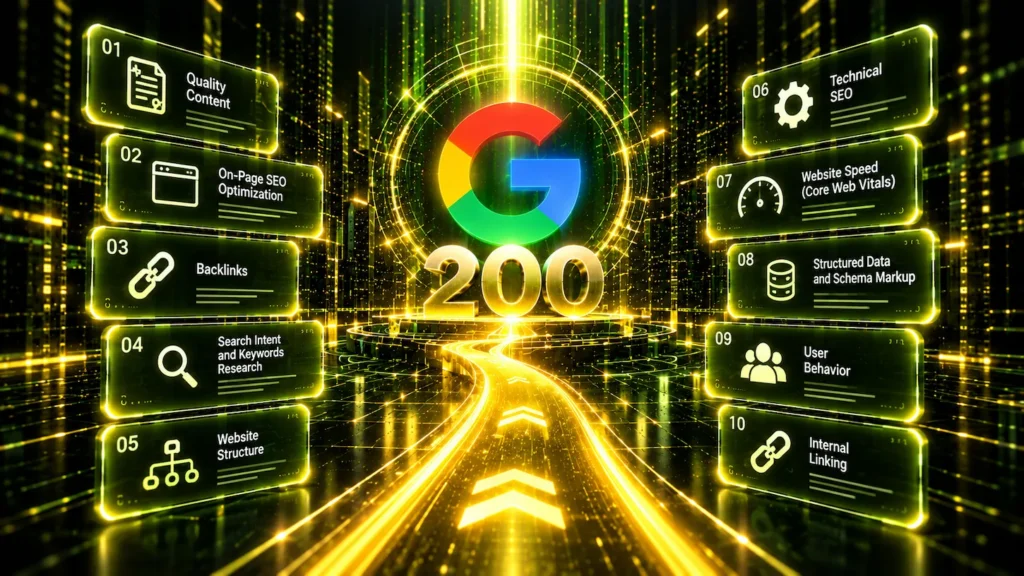
Google has approximately 200 ranking factors. Or 203. Or perhaps considerably more. The truth? Nobody outside Google knows the exact number, and Google has never published an official, complete list. But here’s the good news: you don’t need to master 200 mysterious algorithm signals to improve your rankings. You need to understand the handful of SEO fundamentals that matter most, fix the problems holding your website back, and stop wasting time on myths dressed up as expert advice.
Welcome to the Google ranking factors checklist for 2026-2027 – where we separate what Google actually says from what the internet has been repeating for the last decade.
And yes, we’re going to talk about those famous 200 factors. Just without pretending that Google keeps a numbered checklist in a secret underground bunker.
The 200 Google Ranking Factors: Where Did That Number Come From?
The number 200 became popular during Google’s earlier years, when company representatives discussed the use of more than 200 signals in search ranking.
SEO professionals took that figure and ran with it.
Before long, articles appeared promising complete lists of Google’s 200 ranking factors. Some contained 200 items, others contained more, and many mixed confirmed signals with patents, correlations, outdated practices, and educated guesses.
The problem is that a ranking signal, a ranking system, and an SEO best practice are not necessarily the same thing.
For example:
Ranking signal: Information that may help Google’s systems evaluate a page.
Ranking system: Technology that processes signals to determine which results are most relevant.
SEO best practice: An improvement that helps search engines or users, whether or not it is a direct ranking factor.
SEO myth: Something repeated so often that people assume Google confirmed it.
Google’s own guide to ranking systems describes technologies such as PageRank, RankBrain, BERT, and passage ranking. These systems work together rather than following a simple 200-point scoring sheet.
So, is the number 200 completely fictional? No. It has historical roots.
Is it a reliable count of Google’s ranking factors in late 2026-2027? Also no.
Think of it like saying a modern car has exactly 200 components because somebody counted the parts in an older model. The general idea survives, but the number is no longer particularly useful.
The 80/20 SEO Rule: Why 10 Priorities Beat 200 Distractions
Imagine spending three weeks researching whether registering your domain for ten years helps rankings, while your most important service page isn’t even indexed.
That’s the SEO equivalent of polishing your car’s headlights while the engine is missing.
The Pareto principle suggests that a relatively small number of actions often produce a disproportionately large share of results. In SEO, this makes an excellent way to prioritize work.
For most small and medium-sized businesses, ten areas deserve attention before obscure technical theories.
That doesn’t mean the remaining signals are worthless. Some technical problems can completely prevent a page from appearing in search results.
It means you should prioritize based on impact, not the length of somebody else’s SEO checklist.
The Top 10 Google Ranking Priorities for 2026-2027
- Quality Content
- On-Page SEO Optimization
- Backlinks and Link Authority
- Search Intent and Keyword Research
- Website Structure and Dedicated Service Pages
- Technical SEO
- Website Speed and Core Web Vitals
- Structured Data and Schema Markup
- User Behaviour, Website Traffic and Search Satisfaction
- Internal Linking and Content Coverage
These are the ten areas that deserve the most attention when optimizing a modern business website. They are not Google’s official ranking order, and they don’t account for a mathematically proven 80% of ranking success. Instead, they represent the practical fundamentals that often make the biggest difference.
Let’s examine what each one means, why it matters, and what business owners should understand before investing in SEO.
1. Quality Content – The Foundation of Google Rankings
 Before websites had fancy animations, interactive menus, or even CSS, they had content. Plain HTML pages filled with text and hyperlinks were enough for early search engines to understand what a website was about.
Nearly three decades later, that fundamental principle hasn’t disappeared.
Content is still the primary way Google understands what a webpage offers and which searches it can satisfy.
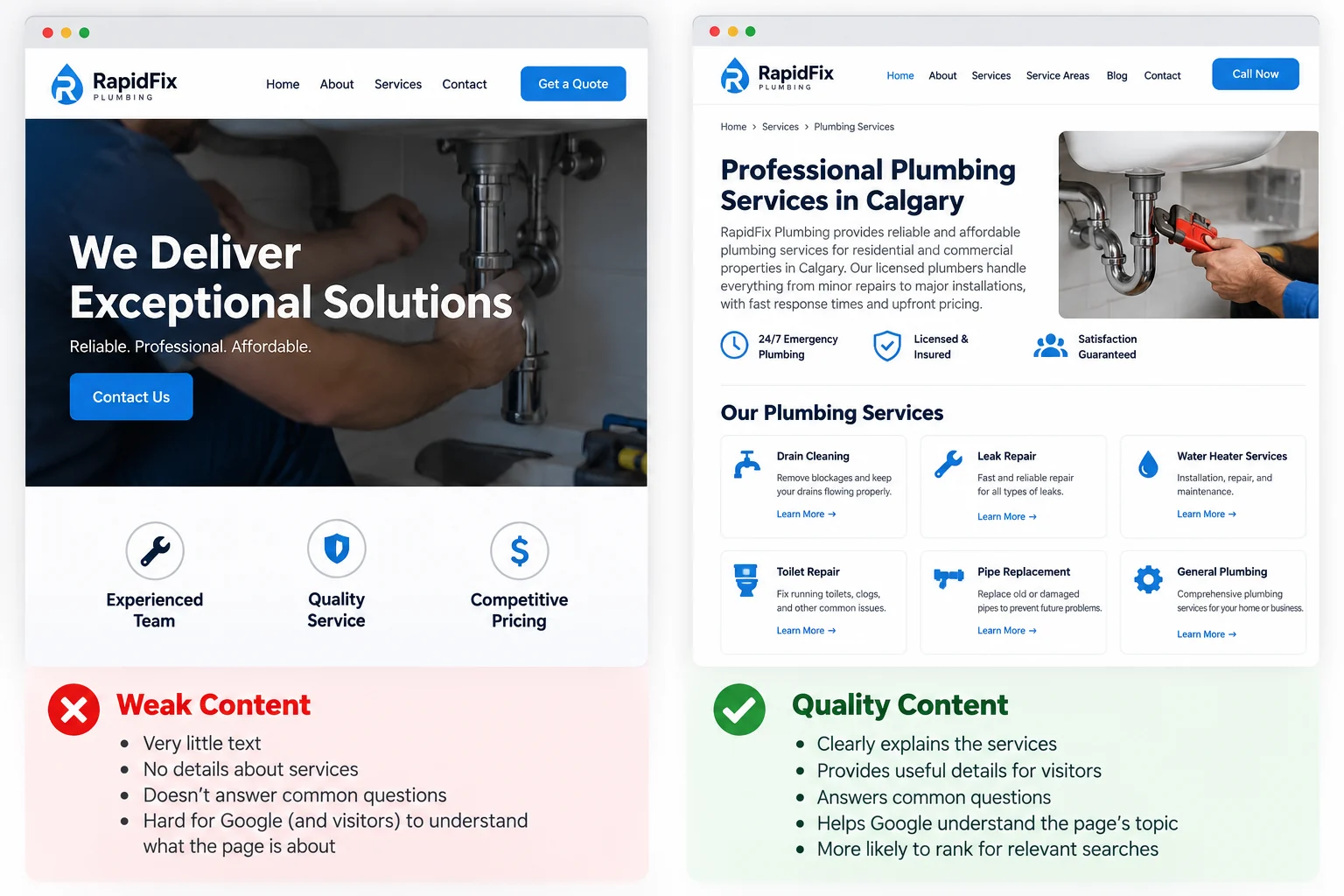
Yet some modern business websites seem determined to hide this information. You open the homepage, see a spectacular background video, and read a headline saying, “We Deliver Exceptional Solutions.”
Exceptional solutions for what? Plumbing? Accounting? Spaceship maintenance?
A beautiful design cannot replace a clear explanation of your services.
Quality content answers real questions, describes products and services accurately, provides useful details, and gives visitors a reason to choose your business. It doesn’t need to be artificially long, and it certainly doesn’t need the same keyword repeated 50 times.
Google’s own guidance on helpful, people-first content emphasizes originality, usefulness, and satisfying the reader’s needs.
A 600-word service page can be excellent. A 3,000-word guide can also be excellent. The difference is whether the content actually delivers value.
If Google and your visitors cannot clearly understand what your page is about, the rest of your SEO strategy is already fighting an uphill battle.
2. On-Page SEO Optimization – Make Your Content Impossible to Misunderstand
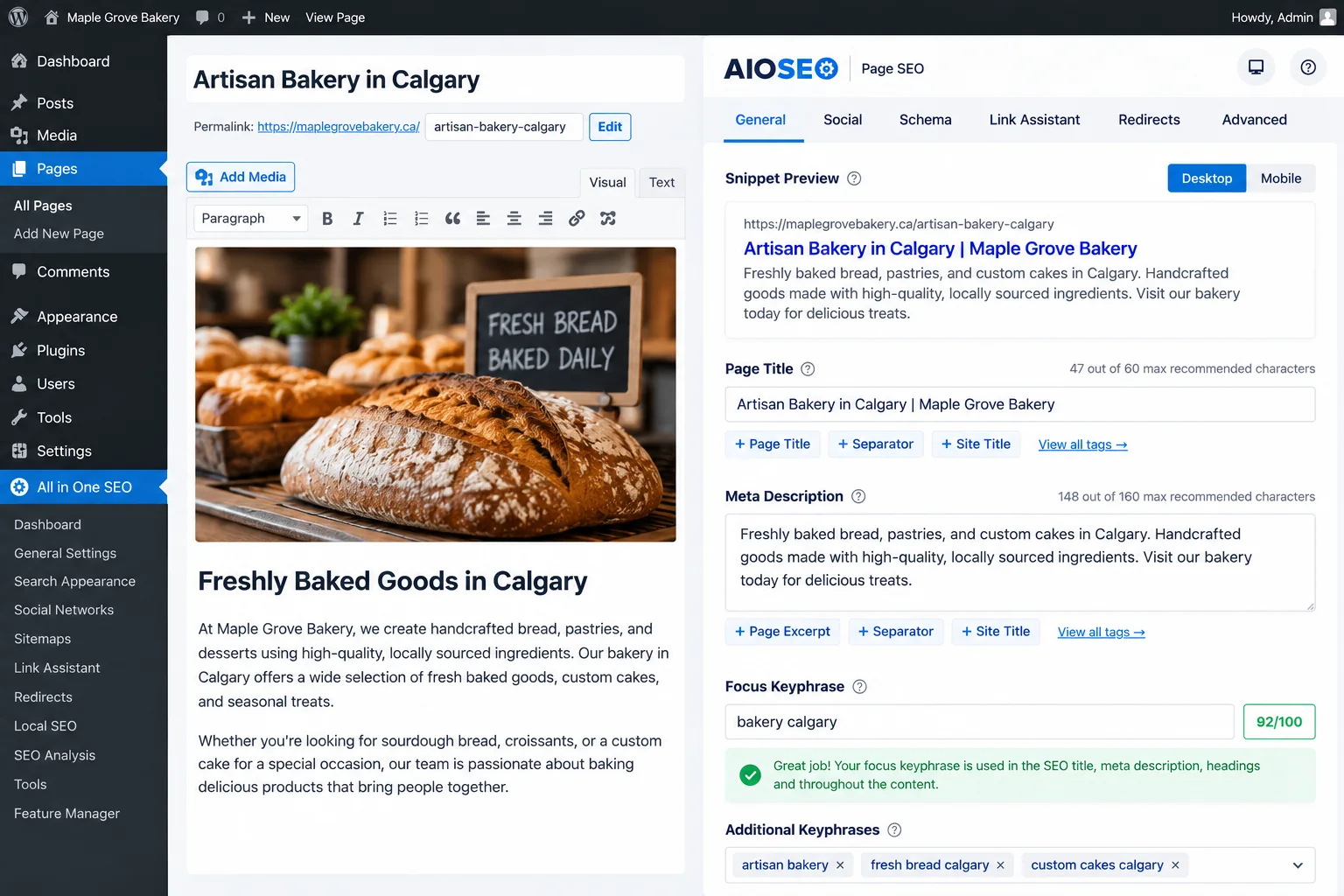
Writing excellent content is one thing. Presenting it properly to Google is another.
On-page SEO involves optimizing individual webpages through descriptive title tags, headings, meta descriptions, URLs, image alt text, and natural keyword placement.
Imagine two roofing companies.
The first has a page titled “Our Amazing Services” with a headline saying “Building a Better Tomorrow.”
The second has a page titled “Commercial Roof Repair Services in Toronto” with clear sections explaining roof inspections, leak repairs, emergency services, and maintenance.
Which page gives Google a clearer understanding of its purpose?
Exactly.
A properly optimized page should have a descriptive title, a clear H1 heading, logical subheadings, and content that naturally uses the terminology customers search for.
Meta descriptions can help improve search-result presentation, although they aren’t direct ranking factors.
And keyword stuffing? That’s not optimization. That’s turning your website into a broken record.
On-page SEO helps search engines interpret your content accurately while making it easier for visitors to find the information they need.
3. Backlinks and Link Authority – Google’s Original Popularity Contest
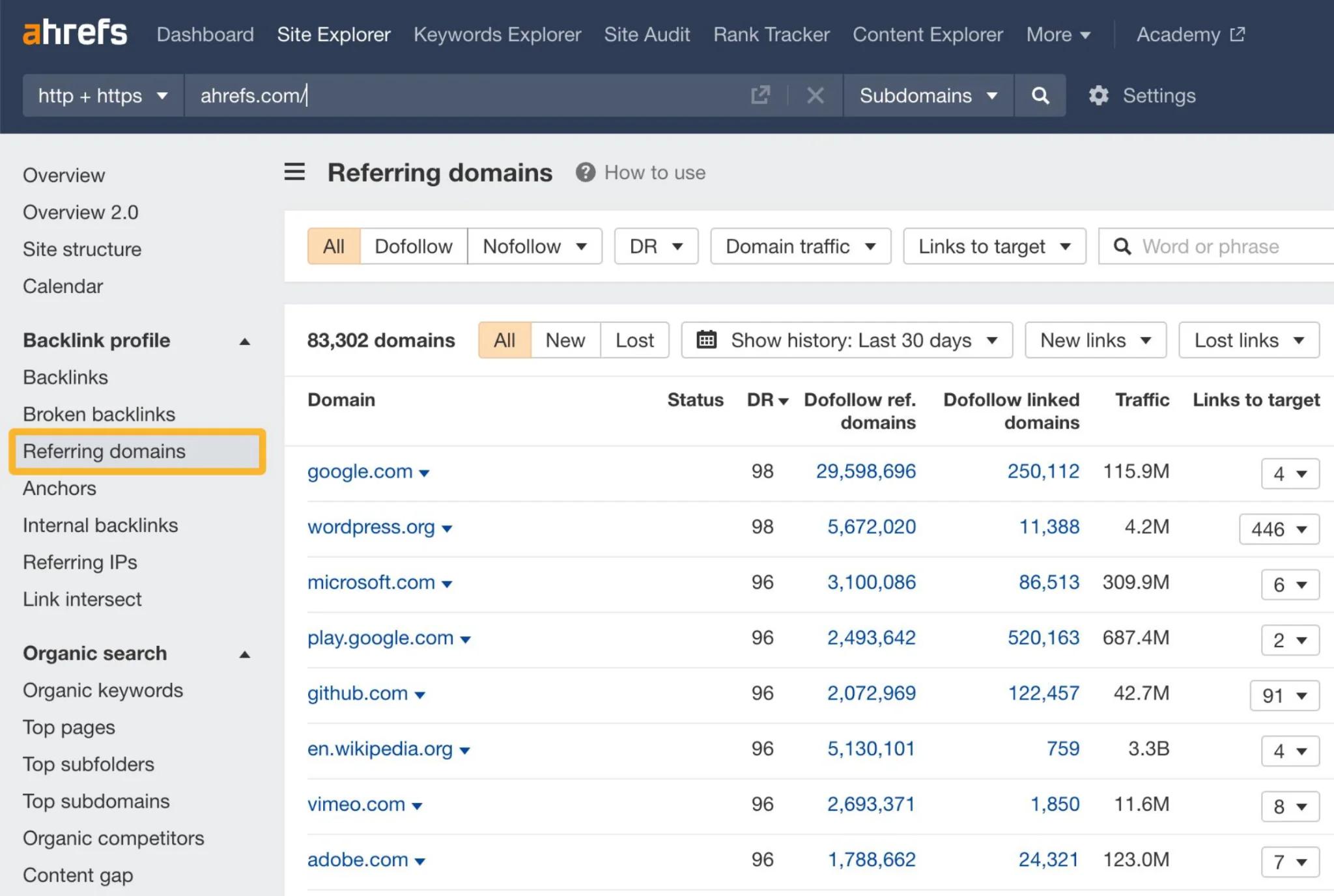 Backlinks have been central to Google’s ranking technology since its earliest days.
Google’s original PageRank algorithm used links between webpages to help evaluate their importance. Modern PageRank has evolved considerably, but Google’s ranking systems documentation confirms that link analysis remains part of its core technology.
A backlink is simply a link from another website pointing to yours.
Think of backlinks as recommendations. When a respected industry publication references your business or research, that link can help search engines evaluate the destination page.
But not all recommendations are equal.
A genuine link from a relevant industry publication is very different from 5,000 links generated by suspicious directories overnight.
The quality, relevance, and context of backlinks matter far more than impressive-looking numbers.
Great content gives people a reason to visit your website. Relevant backlinks can help search engines recognize its importance and discoverability.
4. Search Intent and Keyword Research – Stop Thinking Like a Business Owner
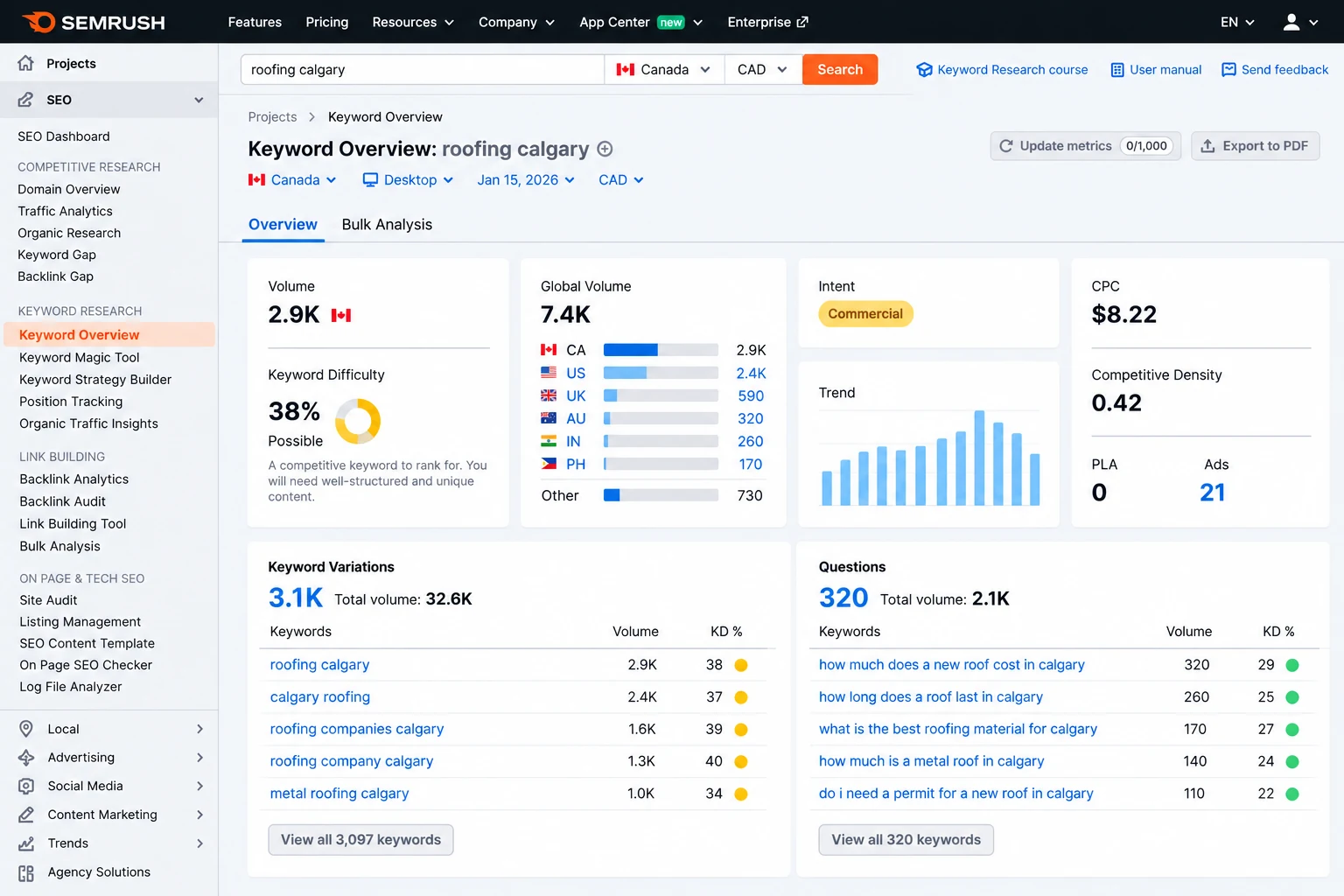 Here’s a surprisingly common SEO mistake: business owners assume customers search using the same terminology they use.
A heating company might describe its services as “advanced residential climate management solutions.”
Meanwhile, customers are searching for “furnace repair near me.”
See the problem?
Keyword research reveals what people actually search for, while search intent explains what they want to accomplish.
Some people want information. Others want to compare products, find a particular company, or hire someone immediately.
A person searching “how to unclog a drain” expects a different result from someone searching “emergency drain cleaning service.”
Effective SEO analyzes actual search demand, competing pages, and the intent behind keywords instead of relying on assumptions.
A keyword with 100 highly relevant monthly searches may be more valuable than one with 10,000 searches from people who have no interest in buying.
Don’t optimize for the words you think customers use. Research the words they actually type into Google.
5. Website Structure and Dedicated Service Pages – One Page Cannot Do Everything
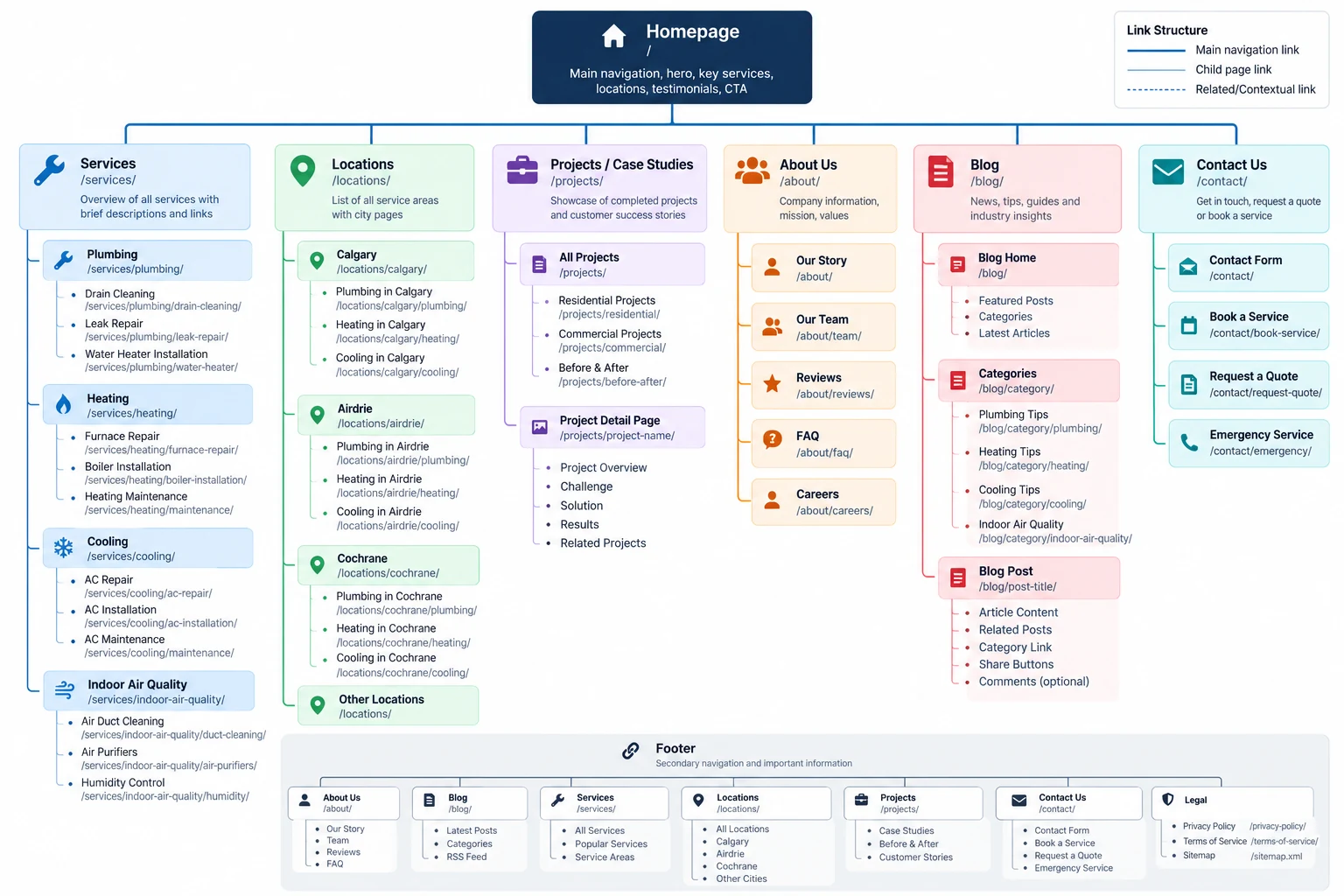 Imagine a restaurant serving pizza, sushi, steaks, and breakfast – but putting everything under one menu item called “Food.”
That’s how many business websites organize their services.
A plumbing company might offer drain cleaning, water heater installation, sewer repairs, and emergency plumbing, yet describe everything on one generic Services page.
Google can understand broad pages, but dedicated pages often provide stronger relevance for distinct services and search intents.
Each important service deserves an appropriate destination explaining what it includes, pricing, who needs it, and what problems it solves.
The opposite extreme is equally problematic.
Creating dozens of nearly identical pages that simply swap location names is not a clever SEO strategy. Such pages can become doorway pages when they exist primarily to manipulate similar searches.
Build separate pages for genuinely different services and products, not endless variations of the same keyword.
6. Technical SEO – Modern Websites Need More Than Pretty Code
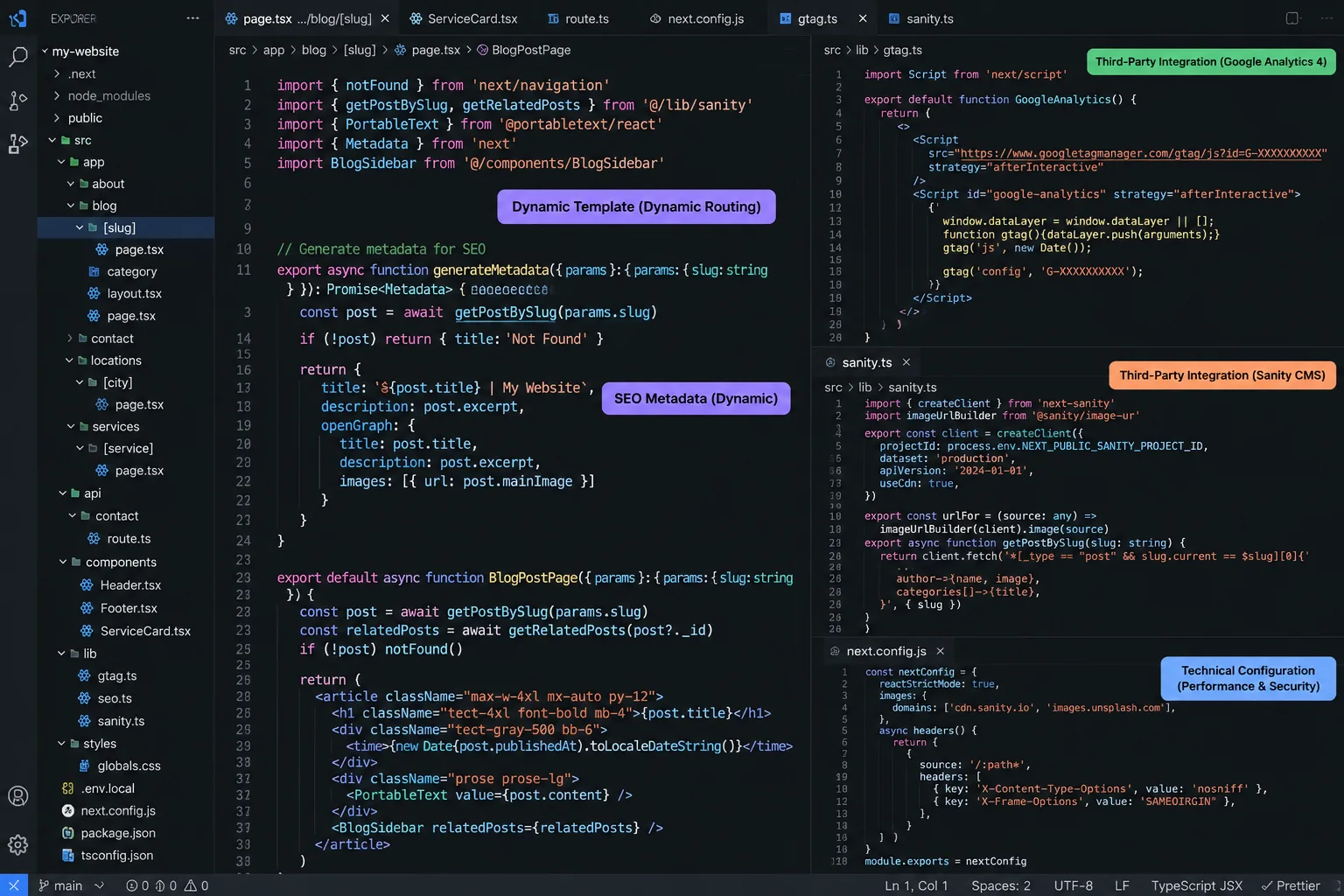 Technical SEO in 2026–2027 is not just about finding a missing HTML tag or checking whether a robots.txt file exists.
Modern websites rely on JavaScript frameworks, content management systems, dynamic templates, third-party integrations, and increasingly automated development tools.
These technologies make sophisticated websites possible, but they can also introduce problems.
For example, a website may display content perfectly to visitors while delivering it through JavaScript in ways that complicate Google’s processing. An online store may generate thousands of unnecessary URLs through product filters. A poorly managed redesign may break established links and create duplicate pages.
Google can process JavaScript, but implementation still matters.
Modern technical SEO focuses on clean website architecture, reliable rendering, sensible URL management, proper redirects, efficient CMS configuration, and avoiding unnecessary technical complexity.
A website should be engineered for search visibility from the beginning, not simply decorated and handed to an SEO specialist afterward.
7. Website Speed and Core Web Vitals – Nobody Enjoys Waiting
Some websites load instantly. Others make you wonder whether your internet connection has travelled back to 2004.
Website speed matters because visitors expect pages to respond quickly and reliably.
But there are two sides to performance.
The first is real-world usability – how fast a website feels, how quickly visitors can interact with it, and whether its interface behaves properly.
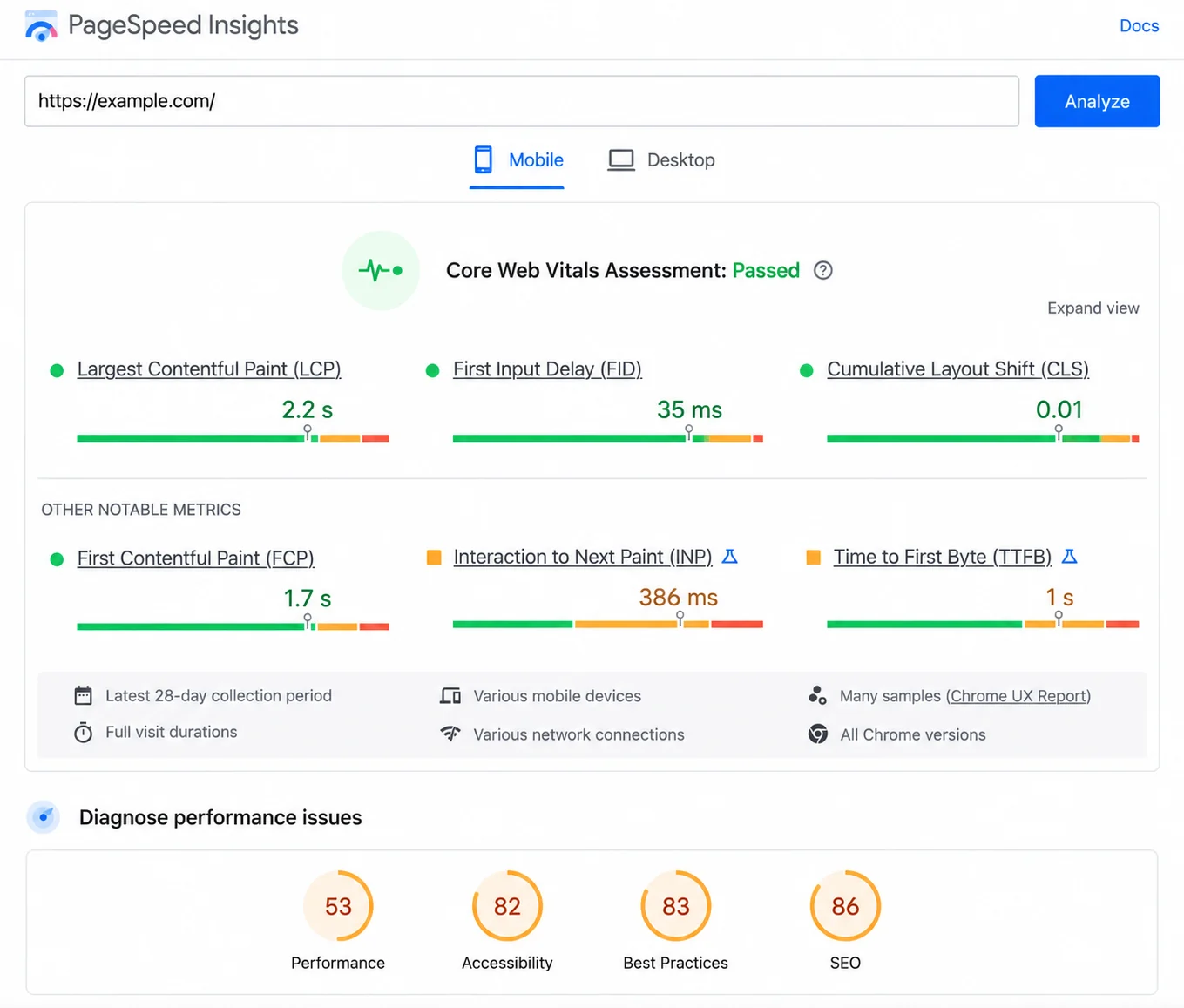
The second involves technical measurements such as Google’s Core Web Vitals.
These include:
Largest Contentful Paint (LCP) – loading performance, with a recommended good threshold of 2.5 seconds or less.
Interaction to Next Paint (INP) – responsiveness, with a recommended good threshold of 200 milliseconds or less.
Cumulative Layout Shift (CLS) – visual stability, with a recommended good threshold of 0.1 or less.
Tools such as PageSpeed Insights help identify performance problems, but a perfect laboratory score does not guarantee excellent rankings.
Build a fast, stable website for real visitors, and use performance measurements to identify what needs improvement.
8. Structured Data and Schema Markup – Giving Google a Clearer Explanation
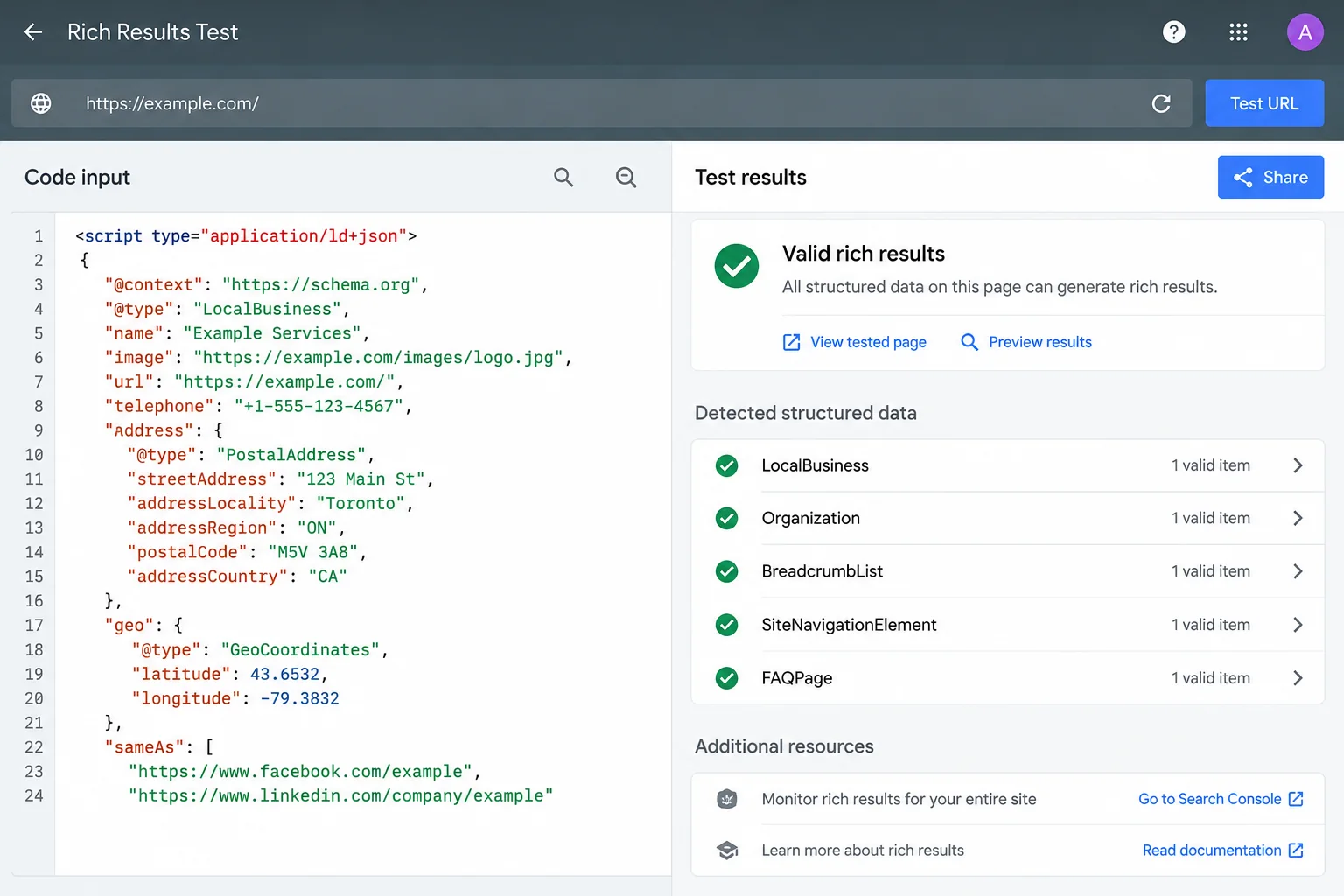 Imagine telling Google that your webpage contains a business name, service, address, price, or product.
Now imagine providing that information in a standardized format that search engines can process.
That’s the purpose of structured data.
Schema.org provides a shared vocabulary for describing information, while JSON-LD is a commonly recommended implementation format.
Appropriate markup can help search engines identify organizations, products, articles, breadcrumbs, events, and other supported information.
For example, Product schema can provide structured product details, while BreadcrumbList markup helps describe a page’s position within a website.
Google explains in its structured data documentation that markup can help it understand content and enable eligible rich results.
However, schema is not a magic ranking button. Adding markup does not automatically improve organic positions.
Structured data helps make information machine-readable and can support enhanced search appearances when implemented correctly.
9. User Behaviour, Website Traffic and Search Satisfaction – What Happens After the Click?
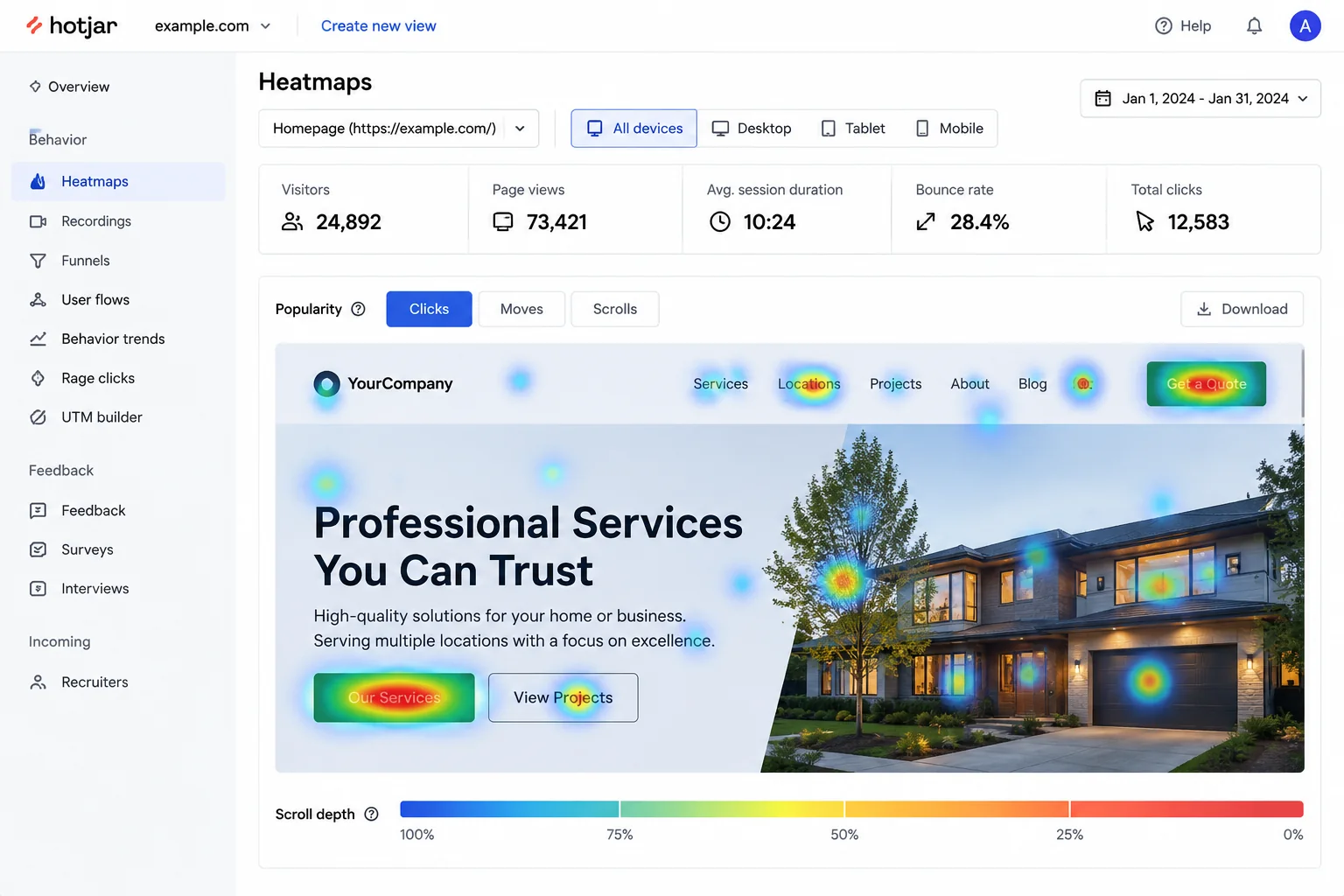 Getting someone to click your website is only half the battle.
What happens next?
Do visitors find the information they need? Do they explore related pages? Do they submit an enquiry, make a purchase, or book an appointment?
These interactions help businesses understand whether their websites are effective.
Google also uses various forms of interaction information within its search technologies, although the exact influence of individual behavioural signals on rankings is not fully public.
An important distinction: Google has not confirmed that every scroll, booking-button click, or Google Analytics engagement measurement directly improves rankings.
The same applies to traffic volume. A website receiving 50,000 visitors doesn’t automatically outrank one receiving 5,000.
Nevertheless, traffic quality, organic clicks, engagement, and conversions are essential measurements of SEO success.
A website attracting fewer visitors who actually become customers can be far more valuable than one attracting thousands of irrelevant clicks.
Optimize for visitors who find useful answers and accomplish their goals, not artificial engagement statistics.
10. Internal Linking and Content Coverage – Turn Your Website Into a Connected Network
 The World Wide Web was built on hyperlinks. Long before sophisticated website builders existed, HTML links connected one document to another.
Google’s crawlers still use links to discover pages and understand relationships between them.
Internal linking connects pages within the same website.
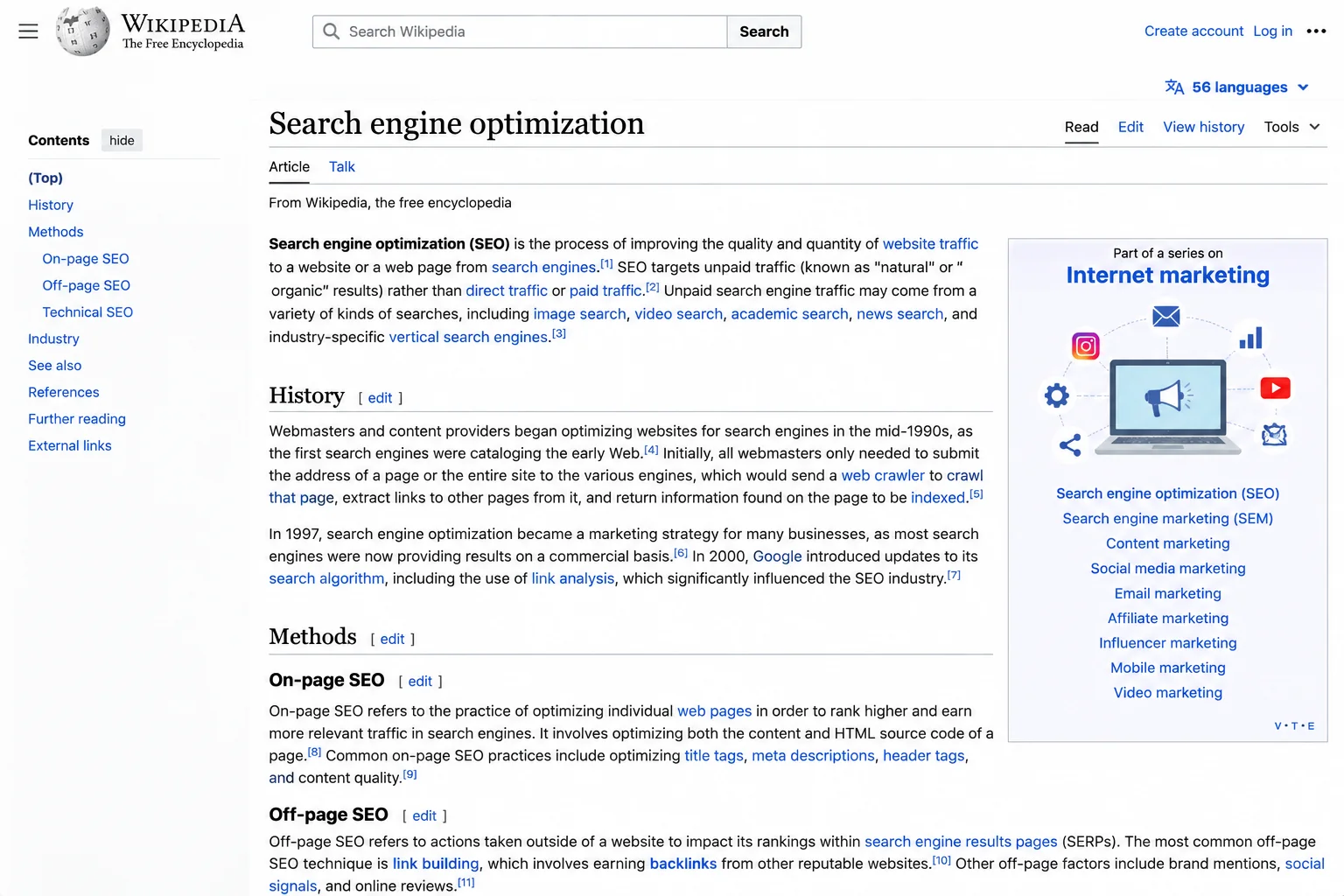
Think about Wikipedia. Its articles contain contextual links leading readers from one subject to another, creating an enormous interconnected information network.
Business websites can apply the same principle.
Suppose a company has a dedicated furnace repair service page. Its blog could contain articles explaining why furnaces stop working, how to recognize common problems, and when professional repairs are necessary.
Each article can naturally link to the relevant service page and other useful resources.
This approach helps expand the range of searches a website can serve while supporting commercial pages through contextual internal links.
Google’s link best practices explain how internal links and descriptive anchor text help search engines discover and understand pages.
Don’t build a collection of isolated pages. Create a connected website where service pages, products, and useful blog articles support one another.
The Other 190 Google Ranking Factors – Your Complete SEO Checklist
We’ve covered the ten major priorities. Now it’s time to examine the remaining 190 factors.
One important clarification: These are not 190 additional ranking signals officially confirmed by Google. Instead, they are a detailed expansion of the 10 core SEO factors covered above. Each major factor is broken down into smaller, more specific elements to help you understand exactly what influences website performance and what you can optimize.
These 190 points include established ranking signals, technical requirements, search appearance features, diagnostic metrics, and practical SEO recommendations. Think of them as a comprehensive, actionable checklist that explores the original 10 factors in greater depth, rather than 190 entirely separate ranking factors.
Some can influence ranking directly. Others help search engines discover or understand content, qualify pages for particular features, or improve the experience of visitors.
The purpose of this checklist is to help you identify what deserves attention – not to suggest that every item carries equal weight.
Domain and URL Factors – 11 to 30
11. Domain Age – Older domains may have accumulated content, backlinks, and recognition over time. However, domain age alone is not a guaranteed ranking advantage.
12. Domain History – A domain previously used for spam or manipulative practices may require investigation. Check its history before purchasing an established domain.
13. Exact-Match Domains – Including a keyword in a domain name doesn’t guarantee higher rankings. Google’s systems limit excessive advantages from domains created to match particular searches.
14. Branded Domain Names – Memorable brands can attract repeat visitors, mentions, and natural links. These benefits are valuable, even though a branded name itself isn’t a universal ranking shortcut.
15. Country-Code Top-Level Domains – Country-specific extensions can help communicate geographic targeting when a website serves a particular national market.
16. Generic Domain Extensions – Extensions such as .com, .net, and .org do not automatically receive superior rankings simply because they’re familiar.
17. Domain Registration Length – Registering a domain for ten years instead of one is not an established way to improve Google rankings.
18. Domain Ownership Changes – Ownership changes don’t automatically damage SEO. Problems usually arise when the website’s content, purpose, technical setup, or existing links change significantly.
19. Subdomains vs. Subdirectories – Both can perform well in Google Search. Choose the structure that makes sense for your content, maintenance requirements, and website architecture.
20. Domain Migration – Moving to a new domain requires proper redirects, updated internal links, and performance monitoring to minimize disruption.
21. Descriptive URLs – Readable URLs help visitors understand page topics and make website structures easier to navigate.
22. Keywords in URLs – Relevant words can provide context, but rewriting established URLs simply to insert keywords may create unnecessary risks.
23. URL Consistency – Inconsistent capitalization, trailing slashes, and alternative URL versions can create duplicate content and maintenance problems.
24. URL Depth – Deeply nested URLs aren’t automatically harmful, but unnecessarily complicated structures can make navigation and maintenance more difficult.
25. Hyphens in URLs – Hyphens are a straightforward way to separate words in readable URL paths.
26. URL Parameters – Filtering, tracking, and sorting parameters can create large numbers of URL variations. Manage them carefully to avoid unnecessary duplication.
27. Canonical URLs – Canonical references help Google identify preferred versions when several URLs contain identical or substantially similar content.
28. Permanent Redirects – Appropriate permanent redirects guide visitors and search engines from outdated URLs to their replacements.
29. Temporary Redirects – Temporary redirects are useful when a move is genuinely short-term and the original URL should remain the preferred destination.
30. Broken URLs – Important pages and links should not lead to unnecessary errors. Repair broken destinations or redirect them to genuinely relevant alternatives.
Content Quality and Relevance Factors – 31 to 60
31. Original Content – Provide information, examples, explanations, or insights that offer genuine value beyond what competitors already publish.
32. Topical Relevance – Each page should clearly address its intended subject rather than mention important keywords only incidentally.
33. Content Completeness – Cover the questions readers reasonably expect answered without adding irrelevant sections merely to increase word count.
34. Factual Accuracy – Incorrect specifications, misleading claims, and outdated information can reduce usefulness and customer confidence.
35. Content Clarity – Explain services, products, and concepts in language the intended audience can understand.
36. Readability – Well-structured paragraphs, understandable terminology, and logical formatting make content easier to use.
37. Unique Page Purpose – Every important page should serve a distinct purpose instead of repeating another page with minor wording changes.
38. Thin Content – Pages containing very little useful information may struggle to satisfy searches that require substantial explanations.
39. Duplicate Content – Repeated material across several URLs can create canonicalization problems and make it harder to establish preferred pages.
40. Near-Duplicate Service Pages – Avoid creating dozens of nearly identical pages that differ only by a keyword or location name.
41. Primary Keyword Relevance – The main search term should naturally match the page’s content and intended audience.
42. Related Keywords – Relevant variations and terminology help explain a subject without repeatedly forcing the same phrase into every paragraph.
43. Semantic Context – Include relevant concepts, processes, and terminology that genuinely belong to the topic.
44. Content Depth – Complex subjects often need detailed explanations. Simpler questions may be answered effectively in a few paragraphs.
45. Content Length – Google doesn’t prescribe a universal ideal word count. Write enough to satisfy the reader’s needs.
46. Content Freshness – Recent information matters for searches involving changing prices, regulations, technology, and current events.
47. Evergreen Accuracy – Timeless guides should remain factually correct without unnecessary rewriting merely to appear recently updated.
48. Content Updates – Review important pages periodically to correct outdated details, improve explanations, and repair broken references.
49. Clear Definitions – Explain unfamiliar terms when writing for readers who may not have specialist knowledge.
50. Direct Answers – Address the central question promptly instead of making readers search through unnecessary introductions.
51. Practical Examples – Realistic examples help explain complicated ideas and make content more useful.
52. Original Visual Content – Relevant photographs, diagrams, and illustrations can support explanations and differentiate content from competitors.
53. Comparison Tables – Tables help readers understand differences between services, products, prices, or technical options.
54. Step-by-Step Instructions – Sequential explanations are valuable when readers want to complete a particular task.
55. Content Formatting – Logical headings, lists, and paragraphs help visitors navigate lengthy resources.
56. Information Consistency – Avoid contradictory pricing, service descriptions, or business details across different pages.
57. Commercial Relevance – Service and product pages should provide the information potential customers need before making decisions.
58. Informational Relevance – Educational articles should answer questions rather than behave like advertisements disguised as tutorials.
59. Content Consolidation – Combining overlapping weak articles can sometimes create a stronger, more focused resource.
60. Low-Value Content Production – Publishing large quantities of repetitive or unhelpful pages can waste resources and may raise concerns under Google’s spam policies.
On-Page SEO Factors – 61 to 80
61. Title Tag Relevance – The title should accurately summarize the page’s primary subject and distinguish it from other pages.
62. Unique Title Tags – Avoid using identical generic titles across multiple important pages.
63. Title Length – Google has no fixed character limit for ranking purposes, but overly long titles may be truncated or rewritten in search results.
64. H1 Heading – A descriptive main heading helps visitors understand the page immediately.
65. Heading Hierarchy – Use logical heading levels to organize information and support readability.
66. Keywords in Headings – Include relevant search terms naturally when they accurately describe a section.
67. Meta Description Relevance – Write descriptions that summarize the page and may encourage relevant visitors to click.
68. Unique Meta Descriptions – Important pages should have descriptions reflecting their individual subjects rather than identical promotional text.
69. Relevant Introductions – Explain the page’s topic early instead of opening with several paragraphs of vague marketing language.
70. Image Alt Text – Describe meaningful images accurately to support accessibility and image understanding.
71. Image Filenames – Descriptive filenames can provide additional context for images.
72. Image Captions – Relevant captions help readers interpret visuals and understand why they matter.
73. Anchor Text Optimization – Use descriptive link text that accurately represents the destination page.
74. Natural Keyword Placement – Include keywords where appropriate without stuffing them into every sentence.
75. Visible Main Content – Make important information accessible without unnecessary clicks or complicated interactions.
76. Semantic HTML – Use appropriate HTML elements to communicate document structure and support accessibility.
77. FAQ Content – Answer common questions when they provide useful additional information, even if FAQ rich results are unavailable.
78. Relevant External References – Link to reliable supporting information when doing so helps readers verify claims or explore a subject.
79. Calls to Action – Provide appropriate opportunities to enquire, purchase, book, or contact the business. These improve conversion opportunities rather than guaranteeing rankings.
80. Content and Template Balance – Avoid overwhelming valuable information with excessive advertisements, navigation elements, and repetitive promotional sections.
Backlink and Off-Page Factors – 81 to 105
81. Relevant Referring Websites – Links from websites covering related subjects can provide useful context and referral traffic.
82. Editorial Backlinks – Naturally earned links placed because content is useful are preferable to manufactured recommendations.
83. Linking Page Relevance – Evaluate the subject of the specific page containing a backlink, not just the overall domain.
84. Contextual Link Placement – Links embedded in relevant editorial content may communicate stronger contextual relationships than unrelated footer links.
85. Backlink Anchor Text – Descriptive anchor text provides context, but excessive manipulation of exact-match keywords can create spam risks.
86. Backlink Diversity – Genuine links from different relevant sources can indicate broader recognition than links manufactured through one network.
87. Referring Domains – Track distinct websites linking to your content as a diagnostic measure, not an official Google scoring formula.
88. Linking Page Quality – Prioritize links from legitimate pages that offer genuine value to their readers.
89. Link Spam – Avoid artificial links created primarily to manipulate organic rankings.
90. Paid Backlinks – Advertising and sponsorship links should use appropriate link attributes rather than disguising paid placements as editorial recommendations.
91. Sponsored Attributes – Use rel="sponsored" where appropriate to identify paid or sponsored links.
92. Nofollow Attributes – The nofollow attribute helps qualify links, and Google treats it as a hint for ranking-related purposes.
93. User-Generated Links – The ugc attribute can identify links within comments, forums, and other user-generated content.
94. New Backlink Monitoring – Review newly discovered links to understand publicity, partnerships, and unusual backlink patterns.
95. Lost Backlinks – Important editorial links may disappear after redesigns or content removals. Investigate significant losses when appropriate.
96. Broken Inbound Links – Redirect retired URLs to relevant replacements when external websites still link to them.
97. Unlinked Brand Mentions – Mentions can create awareness and outreach opportunities, but they aren’t equivalent to confirmed link-based ranking credit.
98. Industry Publication Links – Relevant professional publications can provide valuable editorial exposure and targeted visitors.
99. Professional Association Links – Genuine memberships and professional listings can generate relevant referrals and backlinks.
100. Local Partnership Links – Authentic relationships with nearby organizations can produce useful business exposure and relevant links.
101. Original Research Citations – Publishing unique research, statistics, or resources can attract links from writers and industry publications.
102. Resource Page Links – Inclusion in carefully curated resource collections can help users discover useful content.
103. Digital PR – Newsworthy projects, expert commentary, and original stories can generate editorial coverage and links.
104. Manipulative Link Networks – Avoid private networks designed primarily to manufacture ranking signals.
105. Third-Party Authority Scores – Domain Authority and Domain Rating are analytical estimates from SEO platforms, not official Google ranking metrics.
Website Structure and Internal Linking Factors – 106 to 125
106. Logical Website Hierarchy – Organize pages into clear categories so visitors can understand how services, products, and resources relate.
107. Dedicated Service Pages – Create separate pages for distinct services when they address different customer needs and search intents.
108. Dedicated Product Pages – Important products should have useful individual pages with appropriate descriptions and specifications.
109. Category Pages – Organize related products or services into meaningful categories that help visitors explore available options.
110. Clear Navigation – Make important sections easy to locate through understandable menus and links.
111. Contextual Internal Links – Connect related pages naturally within useful content rather than relying entirely on navigation menus.
112. Descriptive Internal Anchors – Use anchor text that communicates the subject of the linked page.
113. Orphan Pages – Avoid leaving important pages without internal links pointing toward them.
114. Important Page Accessibility – Valuable pages should be reachable through reasonable navigation paths.
115. Breadcrumb Navigation – Breadcrumbs help visitors understand their position within a website’s hierarchy.
116. Breadcrumb Structured Data – Appropriate markup can help Google interpret breadcrumb information for supported search appearances.
117. Related Blog Articles – Link relevant articles together to help readers explore connected subjects.
118. Blog-to-Service Links – Informational articles can direct interested visitors toward relevant commercial services.
119. Service-to-Blog Links – Service pages can reference educational articles that help customers understand problems and solutions.
120. Content Hubs – Group related resources into organized collections that make complex subjects easier to explore.
121. Topic Coverage – Publish useful content addressing different legitimate questions associated with your services.
122. Internal Link Relevance – Every link should have a sensible purpose rather than exist solely to repeat keywords.
123. Internal Link Maintenance – Update links when pages are moved, consolidated, or removed.
124. Pagination Structure – Large collections should provide discoverable links to additional pages and content.
125. Internal Site Search – A useful search feature can improve navigation on large websites, although its presence is not a direct ranking guarantee.
Technical SEO Factors – 126 to 150
126. JavaScript Rendering – Important content should remain accessible when Google processes JavaScript-generated pages.
127. Server-Side Rendering – Server-rendered content can simplify delivery and discovery for certain JavaScript-heavy websites.
128. Client-Side Routing – Modern applications should use meaningful URLs and discoverable links for important content.
129. Dynamic Content Loading – Essential information should not depend entirely on interactions that search crawlers cannot reliably perform.
130. CMS Template Configuration – Website templates should consistently generate appropriate titles, headings, canonical references, and page elements.
131. Duplicate URL Generation – Prevent CMS settings and plugins from creating unnecessary indexable copies of the same content.
132. Canonical Implementation – Use consistent canonical signals to identify preferred URLs when duplicate or alternative versions exist.
133. Redirect Chains – Avoid unnecessary sequences of redirects that complicate navigation and website maintenance.
134. Redirect Loops – Correct redirect configurations that repeatedly send visitors between URLs without reaching a destination.
135. HTTP Status Codes – Servers should return appropriate responses for available, redirected, missing, and unavailable resources.
136. Soft 404 Errors – Avoid presenting missing content while returning an HTTP success status that suggests a valid page exists.
137. XML Sitemaps – Maintain sitemaps containing important URLs to assist search engine discovery.
138. Sitemap Accuracy – Avoid filling sitemaps with redirects, error pages, duplicate variants, or deliberately excluded URLs.
139. Robots.txt Configuration – Ensure crawling restrictions reflect deliberate technical decisions rather than accidental exclusions.
140. Noindex Directives – Apply indexing restrictions only where appropriate and review them after major website changes.
141. Crawl Efficiency – Large websites should minimize unnecessary URL combinations and inefficient crawling paths.
142. Faceted Navigation – Product filters and sorting options should not generate uncontrolled numbers of unnecessary URLs.
143. Infinite Scrolling – Important content loaded through scrolling should have discoverable URLs or navigation where appropriate.
144. Mobile Content Availability – Important information should remain accessible in mobile versions of pages.
145. Responsive Layouts – Websites should adapt properly to different screen sizes without breaking navigation or hiding essential functionality.
146. HTTPS – Secure connections protect data in transit and support modern website security standards.
147. Server Uptime – Frequent outages can prevent successful crawling and frustrate potential customers.
148. Server Response Reliability – Stable server responses help visitors and search engines access content consistently.
149. Website Migration Planning – Redesigns, domain changes, and CMS migrations require URL mapping, redirects, and performance monitoring.
150. Technical Regression Monitoring – Check for problems introduced by software updates, plugin changes, deployments, and redesigned templates.
Website Speed and Page Experience Factors – 151 to 165
151. Largest Contentful Paint (LCP) – Measures how quickly the largest visible content element loads, helping identify delays in primary content delivery.
152. Interaction to Next Paint (INP) – Measures responsiveness to user interactions and helps reveal expensive JavaScript execution or interface delays.
153. Cumulative Layout Shift (CLS) – Measures unexpected visual movement that can interfere with reading and clicking.
154. Real-User Performance Data – Field measurements reflect how actual visitors experience pages across devices and network conditions.
155. Laboratory Performance Tests – Controlled tests help diagnose performance bottlenecks, although their results may differ from real-world measurements.
156. Image Compression – Reduce unnecessary image file sizes while preserving suitable visual quality.
157. Modern Image Formats – Formats such as WebP and AVIF can improve delivery efficiency when appropriately implemented.
158. Responsive Images – Serve images at suitable dimensions instead of forcing mobile devices to download oversized desktop assets.
159. Lazy Loading – Defer noncritical resources when appropriate, without delaying essential above-the-fold content.
160. JavaScript Optimization – Reduce unnecessary scripts and expensive processing that slow loading or interactions.
161. CSS Optimization – Remove unused styles and organize critical CSS to reduce rendering delays.
162. Browser Caching – Configure caching to reduce repeated downloads of unchanged resources.
163. Content Delivery Networks – CDNs can improve resource delivery and reliability for geographically distributed audiences.
164. Third-Party Scripts – Excessive tracking tools, widgets, and external scripts can slow websites and interfere with responsiveness.
165. Visual Stability and Usability – Stable layouts, readable interfaces, and reliable controls improve the overall visitor experience.
Structured Data and Search Appearance Factors – 166 to 180
166. Organization Schema – Describe accurate organizational information using appropriate structured data.
167. LocalBusiness Schema – Provide supported structured information about eligible local businesses and their locations.
168. Product Schema – Eligible product pages can include product information for supported Google Search features.
169. Offer Markup – Accurate pricing and availability details can support eligible product search experiences.
170. BreadcrumbList Schema – Describe breadcrumb navigation using appropriate structured data.
171. Article Schema – Provide relevant structured information about articles when supported by Google’s documentation.
172. VideoObject Schema – Describe eligible video content using supported video structured data.
173. Event Schema – Genuine event pages can use structured data to qualify for relevant event search features.
174. Recipe Schema – Recipe pages can use supported markup for ingredients, preparation details, and other eligible information.
175. FAQ Structured Data – Google limits FAQ rich-result eligibility, so FAQ markup should not be treated as a universal visibility tactic.
176. Review Markup – Review snippets require compliance with Google’s eligibility and content policies, including restrictions on self-serving reviews.
177. Structured Data Accuracy – Markup must represent genuine page information rather than invented ratings, services, prices, or events.
178. Structured Data Validation – Use Google’s Rich Results Test to identify errors in supported structured-data implementations.
179. Search Snippet Optimization – Clear titles and useful page information can help Google generate informative search-result presentations.
180. Rich Result Eligibility – Different Google Search features have specific requirements, and valid markup does not guarantee that a rich result will appear.
Local SEO and Geographic Factors – 181 to 190
181. Google Business Profile Relevance – Accurate business information helps Google understand which local searches a company may satisfy.
182. Business Proximity – Distance from the searcher or specified location is an important consideration in Google’s local ranking systems.
183. Local Prominence – Google’s local systems consider how well-known a business is, including information such as links and reviews.
184. Business Categories – Choose accurate primary and secondary categories that reflect the company’s actual services.
185. Business Information Consistency – Maintain accurate names, addresses, phone numbers, and other important business details.
186. Location-Specific Content – Genuine location pages should explain the services and information relevant to each location.
187. Customer Reviews – Authentic reviews can influence customer decisions and contribute to local prominence.
188. Local Citations – Legitimate business listings can help customers discover and verify business information.
189. Service-Area Relevance – Businesses serving multiple areas should accurately describe their coverage without creating misleading location pages.
190. Local Landing Page Quality – Location pages should provide meaningful information rather than merely replace place names in duplicated text.
For businesses targeting Local SEO in Calgary, these considerations are especially important because local visibility depends on genuine geographic relevance, business information, competition, and Google’s local ranking systems.
User Behaviour, Analytics and Ongoing SEO Factors – 191 to 200
191. Organic Search Clicks – Search Console clicks measure how many visits Google Search sends to your website. They are performance measurements, not proof that raw traffic volume directly improves rankings.
192. Organic Click-Through Rate – CTR shows how often impressions become clicks. It helps evaluate search-result performance but should not be treated as a universal ranking shortcut.
193. Engagement Rate – Analytics engagement measurements help identify whether visitors interact meaningfully with content. GA4 engagement rate is not a confirmed direct Google ranking factor.
194. Average Engagement Time – Time spent actively engaging can help evaluate content, but longer sessions don’t automatically mean better search satisfaction.
195. Bounce Rate – A high bounce rate isn’t necessarily negative. Visitors may find an answer or phone number immediately and leave satisfied.
196. Conversion Rate – Enquiries, purchases, bookings, and calls reveal business effectiveness rather than an officially confirmed direct ranking signal.
197. Returning Visitors – Repeat visits can indicate audience loyalty and useful content, but they don’t automatically generate additional ranking credit.
198. Organic Traffic Trends – Monitor traffic changes to identify improvements, seasonal patterns, competitive changes, and possible visibility problems.
199. Google Search Console Monitoring – Regularly review search queries, impressions, clicks, indexing information, and page performance.
200. Continuous SEO Improvement – Search behaviour, competitors, websites, and Google’s systems evolve. Ongoing content optimization, technical maintenance, and performance analysis help maintain competitiveness.
How to Prioritize Google’s 200 Ranking Factors
Now you have 200 SEO considerations. Does that mean you need to optimize all 200 before your website can rank?
Of course not.
For most small and medium-sized businesses, a sensible approach is to begin with the ten priorities at the top of this guide, then investigate the additional factors that are relevant to the website.
A professional SEO audit can reveal whether the biggest opportunities involve content, technical architecture, backlinks, local search visibility, or user experience.
At OrbiOn Digital, digital marketing strategies connect SEO, Local SEO, web design, website maintenance, and content optimization with measurable business goals.
The objective isn’t to check 200 boxes. It’s to invest in the improvements that actually matter.
Final Thoughts – Google Doesn’t Rank Checklists
Google’s famous 200 ranking factors have become part of SEO history.
But there is no publicly verified master list containing exactly 200 independent signals, each with a fixed score.
Google’s ranking systems evaluate relevance, usefulness, links, and numerous other signals according to the search being performed.
That’s why the smartest SEO strategy doesn’t begin with obscure algorithm theories.
It begins with useful content, clear optimization, relevant backlinks, genuine keyword research, logical website structure, and a technically sound website.
The remaining factors help refine that foundation and identify specific opportunities.
The goal isn’t to impress Google by optimizing 200 separate items. It’s to build a website that deserves to be found when the right customers search.

Our team shares practical insights, helpful tips, and actionable strategies across SEO, paid advertising, social media marketing, website development, content, and more. We aim to make digital marketing easier to understand and help businesses grow online.